Community in an Increasingly Digital World
In the context of an increasingly online culture, Artbox provides a space for offline and ‘IRL’ community and connection. Before we talk about the benefits of in-person communities, we would like to recognise some benefits of online connection. In some cases, online connection is the most accessible option for people who experience barriers and limited social access. Online communities can be accessed from home, at any time, and across long distances, bringing together marginalised communities. Digital platforms, through curation and self selection, can be more affirming and tailored to special interests. However, connecting with others and engaging with communities in person offers important and unique benefits too.
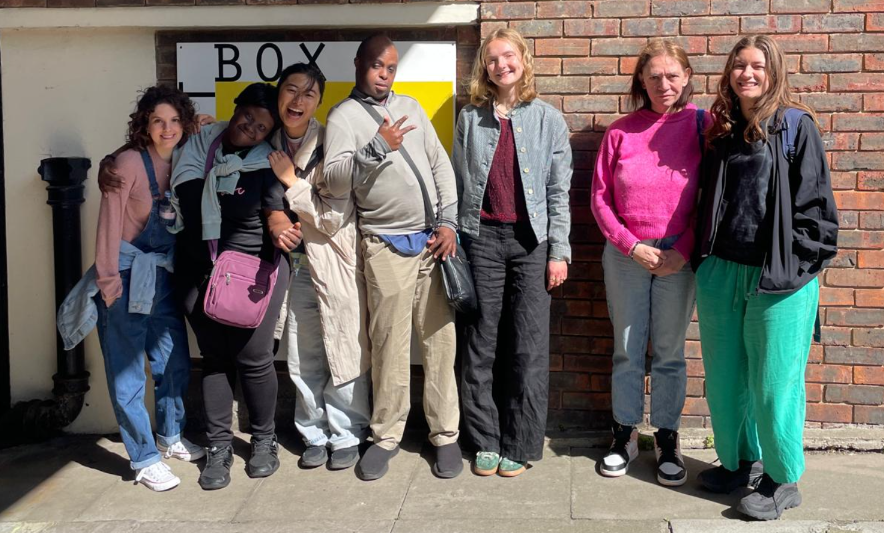
At Artbox, artists come to our physical studio space in Islington once or twice a week, the same days each week, and see the same group of artists and staff members every time. Friendships and connections initially form through a shared interest in artmaking, and then spontaneously, through shared interests that are discovered by virtue of sharing a space. An interest in heroes and villains that is discovered through drawings, a love for 80s music that is revealed over a lunch break, and a shared passion for the animal kingdom are just a few of the spontaneous connections we have witnessed in the studio. Alongside the joy in finding spontaneous similarities, there is importance in building familiarity and connections with people who are different to us. Unexpected friendships, and a shared sense of belonging to a group with diversity gives us the opportunity to feel connected to others that aren’t just like us.
There is a key difference between being a passive member of a community and being an active member, and at Artbox we encourage artists to actively participate, offering many ways to do so. The first step is to sit at the shared table where everyone is making their art, and to partake in artmaking too. Engaging with other artist’s artwork, offering feedback, and perhaps collaborating is another way of actively being a part of our community. With time, some artists participate in co-facilitated sessions outside of Artbox, representing us out in the world, groups of artists come on trips around London, take part in exhibitions and welcome new artists to the studio. Active participation in the community can also look like singing along to other artists’ favourite song, smiling at each other across the table, and making each other tea. All of these experiences contribute to feelings of belonging and purpose, and strengthen the community in a positive feedback loop.
At Artbox, a sense of shared identity is formed, at the artists’ pace and on their own terms. The sense of belonging, identity and purpose found in being part of a community leads to better mental and physical health, and builds up emotional resilience and social support for difficult times. These benefits all contribute to Artbox’s mission of improving the wellbeing of people with learning disabilities and people with autism.
In an increasingly digital world, there is something worth protecting in simply having a place to go, people who expect to see you there, and a table where there is space for you.